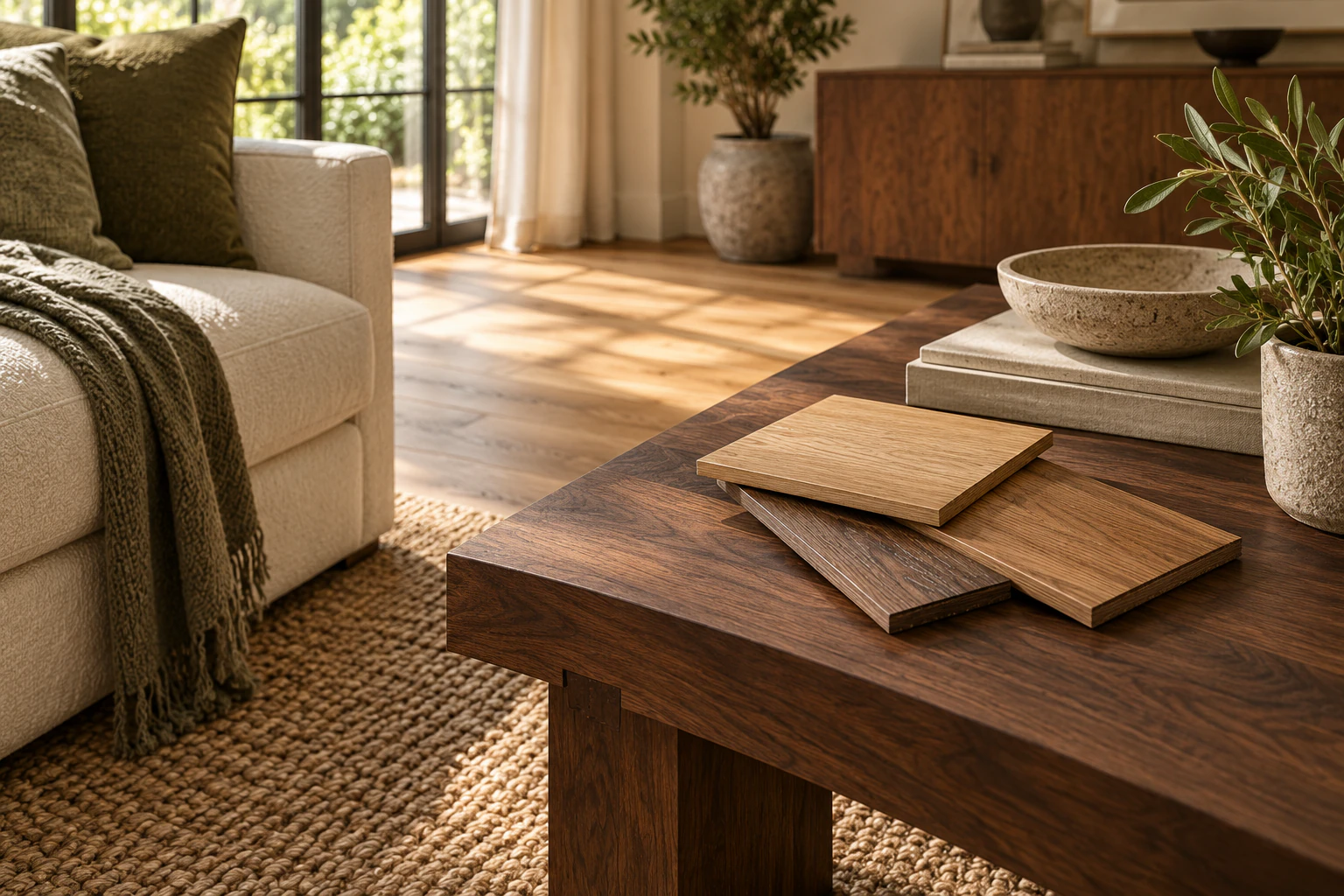
Sustainability
A more considered way to live.
A room does not need to start again each season. There is value in the pieces that stay, the things we care for and the decisions we take our time over.
Our approach to sustainability begins with thoughtful consumption: making fewer unnecessary changes, asking more useful questions and looking beyond the language on a product page.
This is an approach to choosing and living with things, not a certification of Lumesa or of every product we feature.
Begin with what is already there
Before adding something new, look at what your home already holds. A different arrangement, a repair or a piece moved from another room may be enough.
When it is safe and practical, caring for and repairing furniture can help keep it in use instead of replacing it. The U.S. Environmental Protection Agency’s shopping guidance encourages this approach, along with borrowing or sharing items that are needed only occasionally.
A home can evolve without everything in it being new.
Think beyond the first season
When a purchase is needed, we encourage looking past its immediate appeal. Will the dimensions work? Is the care routine realistic? Are replacement parts or covers available? Could the piece work in another room later?
These are questions to ask the retailer or manufacturer, not qualities to assume from a photograph or a price tag.
The aim is to choose something you have a practical reason to keep. We do not treat that intention as a guarantee of lifespan or a measured environmental saving.
Look for specifics, not a reassuring word
A description such as “natural” does not tell the whole story of how an item was sourced, processed or transported. A recycled component does not necessarily mean the entire product is recycled.
The Federal Trade Commission’s Green Guides summary cautions against broad, unqualified environmental claims. Specific information is more useful: what material or component is covered, what the claim means and what evidence supports it.
Our editorial standard is to keep those distinctions visible. An attractive finish or a familiar material name should not stand in for verified information.
Read certifications in context
Labels can help answer particular questions, but they are not interchangeable.
FSC labels describe the sourcing of covered forest-based materials. FSC 100%, FSC Mix and FSC Recycled have different meanings; check the actual label and whether it applies to the product or its packaging.
OEKO-TEX STANDARD 100 concerns textiles tested for harmful substances against that standard. It should not be read as a blanket claim about organic farming, worker conditions or a product’s entire environmental footprint.
These are examples of labels a shopper may encounter, not certifications we claim for Lumesa. A brand-level statement is not enough to establish the status of every item it sells.
Be clear about our role
Lumesa is a discovery platform, not a manufacturer or certification body. We do not control another company’s sourcing, production, packaging or delivery, and inclusion in a collection is not, by itself, an environmental endorsement.
When we discuss a product claim, our standard is to identify its source and scope. A statement from a retailer should not be presented as an independent audit by Lumesa.
Our contribution is a more useful conversation about what to choose, what to question and what may be worth keeping.
A thoughtful next step
Before buying, pause over one question: What will this add to my home that is not already there?
Then check the details with the seller. The answer may be a well-chosen addition. It may also be a reason to keep what you have.
Beautiful Living. Thoughtfully Priced.
Visit the Journal