Thanksgiving Table Decor for 2026: 3 Warm, Affordable Looks
A welcoming Thanksgiving table does not need a new dinner service, a complicated centerpiece, or a different decorative object at every seat. It needs a comfortable place for each person, enough room for the meal, and a few details that make the gathering feel considered.
Start with the dishes and furniture you already own. Then choose one color direction and a small number of additions that can be used again. That approach is easier on the budget and avoids the annual problem of finding storage for another box of single-occasion decor.
The three looks below are original Lumesa styling proposals for the 2026 hosting season. They are not rankings of the most popular tablescapes or claims about products we have tested.
What feels timely this season
Better Homes & Gardens’ 2026 entertaining coverage emphasizes more personal, connection-focused gatherings rather than polished perfection. That is an editorial perspective, not a sales or traffic statistic.
Our interpretation is to make the table feel warm through useful textiles, familiar objects, and a restrained palette. A handwritten name card can contribute more personality than an elaborate matching accessory set. A favorite serving bowl may be a better starting point than a themed centerpiece bought for one afternoon.
Choose the look that works with your existing plates and room. The easiest palette to maintain is usually the one that already has a foothold in your home.
Build one place setting before buying anything
Set out a dinner plate, the cutlery needed for the meal, a napkin, and the glasses you intend to use. Add a smaller plate only when the menu requires it. This is your practical place-setting footprint.
Repeat it for the guest count. Crate & Barrel’s general dining guidance suggests roughly 24 inches of table edge per diner as a starting point, but your chairs, dishes, and guests may need more. Do not use a guideline to justify an uncomfortable arrangement.
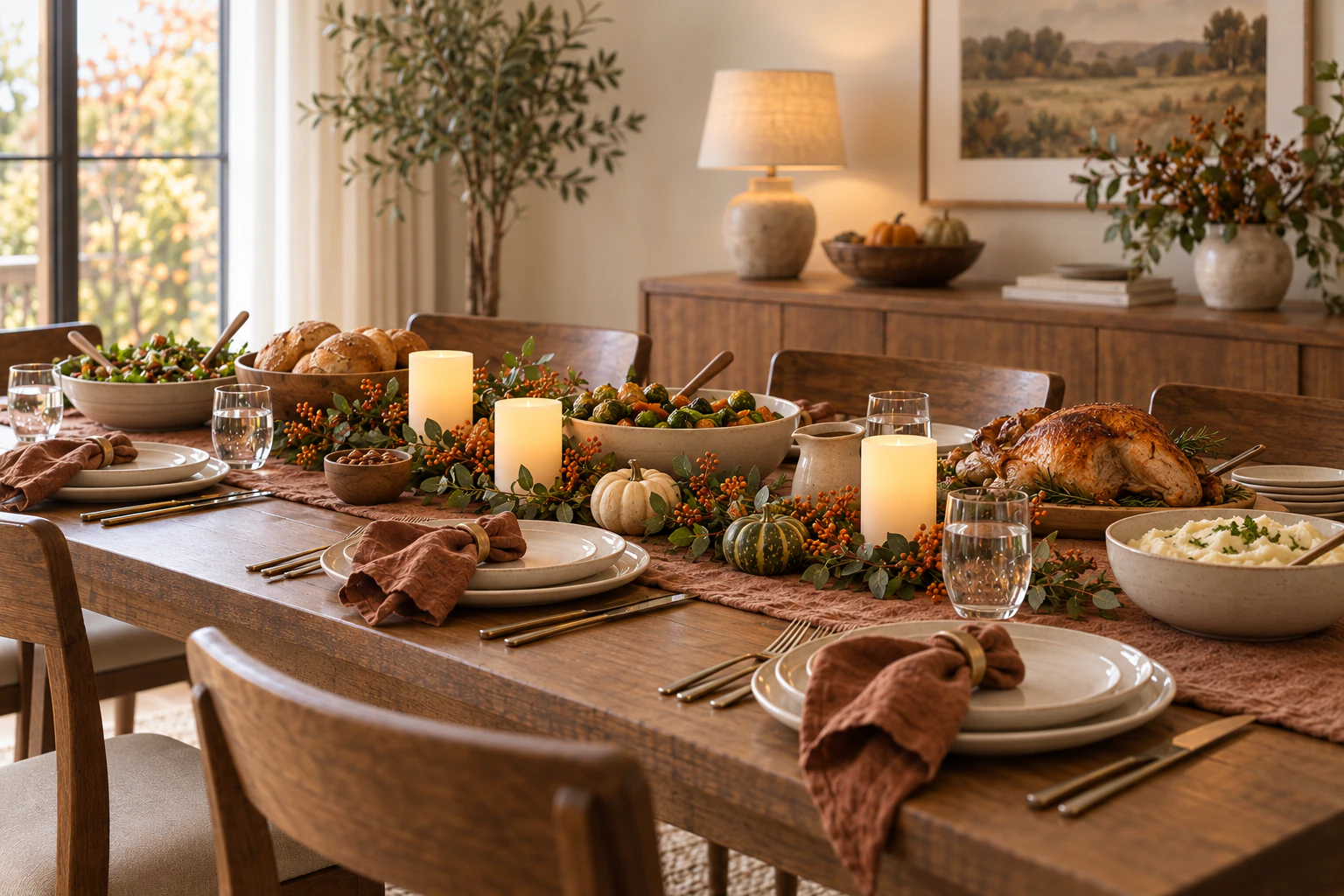
Decide how food will be served. Shared platters need room on the table; a buffet moves that demand elsewhere but requires its own accessible, safe setup. Mark the serving-dish positions before filling the center with decoration.
Finally, sit in a chair and look across the table. Can you see the person opposite? Can you reach the water without moving a centerpiece? Those tests should shape the styling.
Look 1: Cream, caramel, and a restrained harvest detail
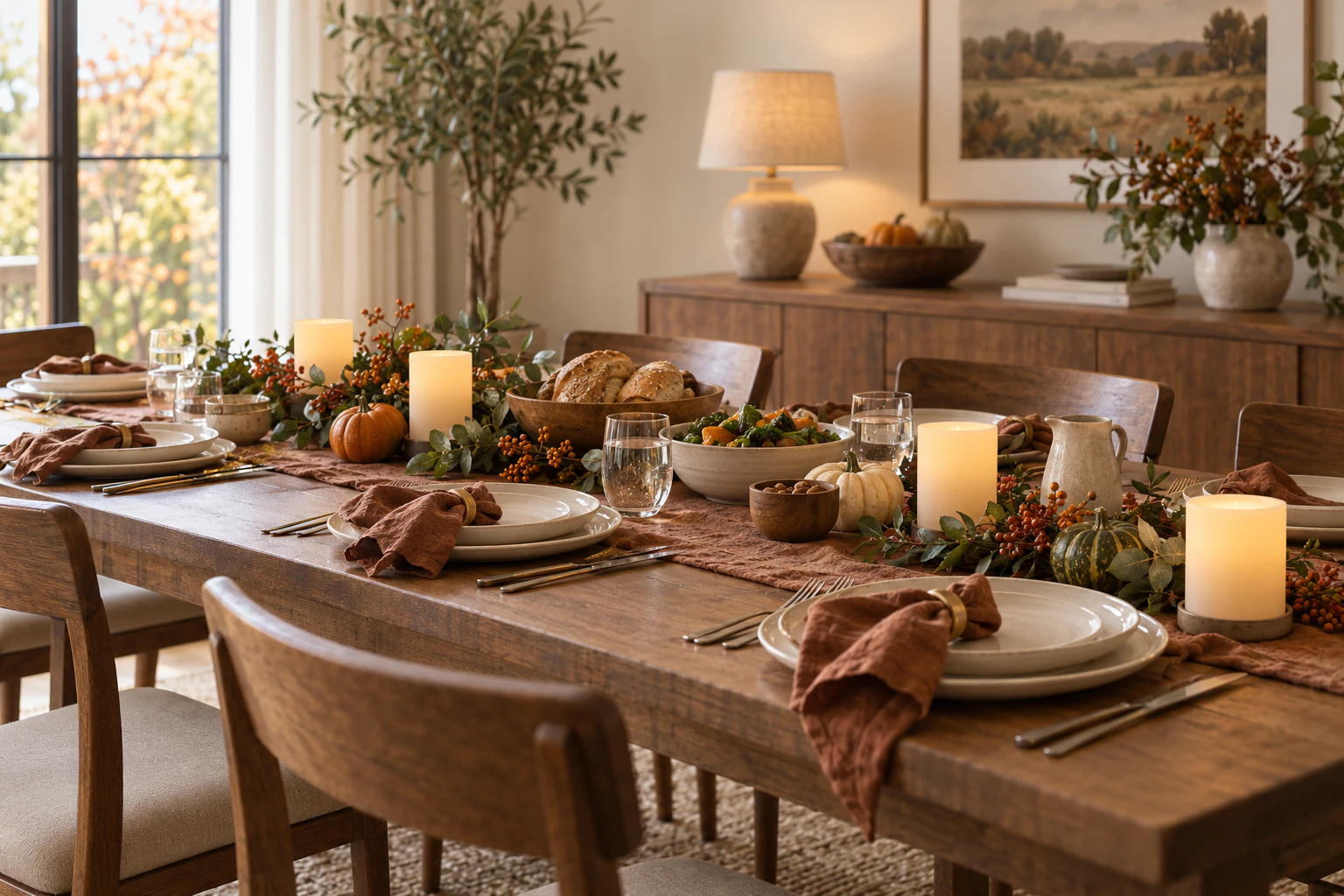
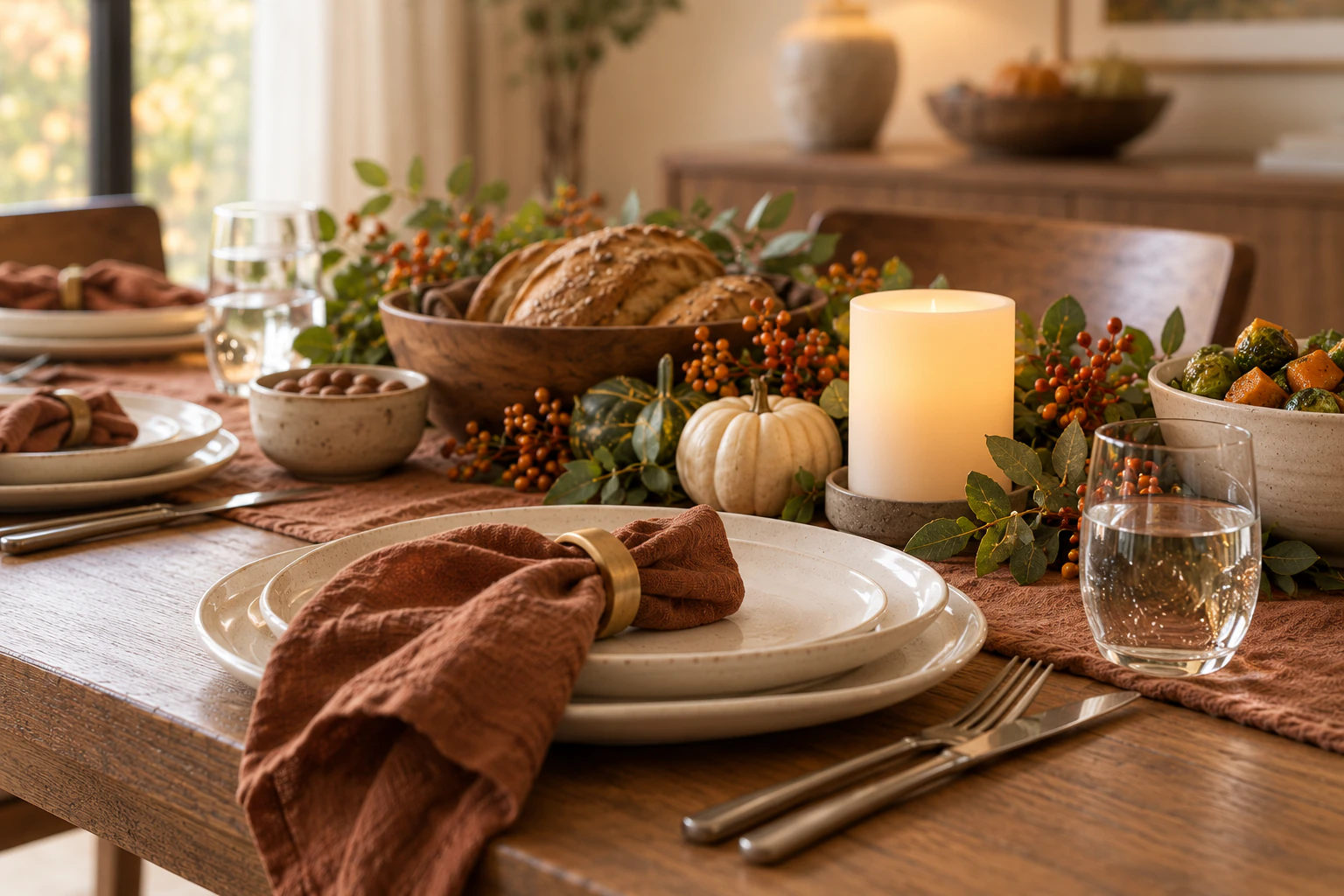
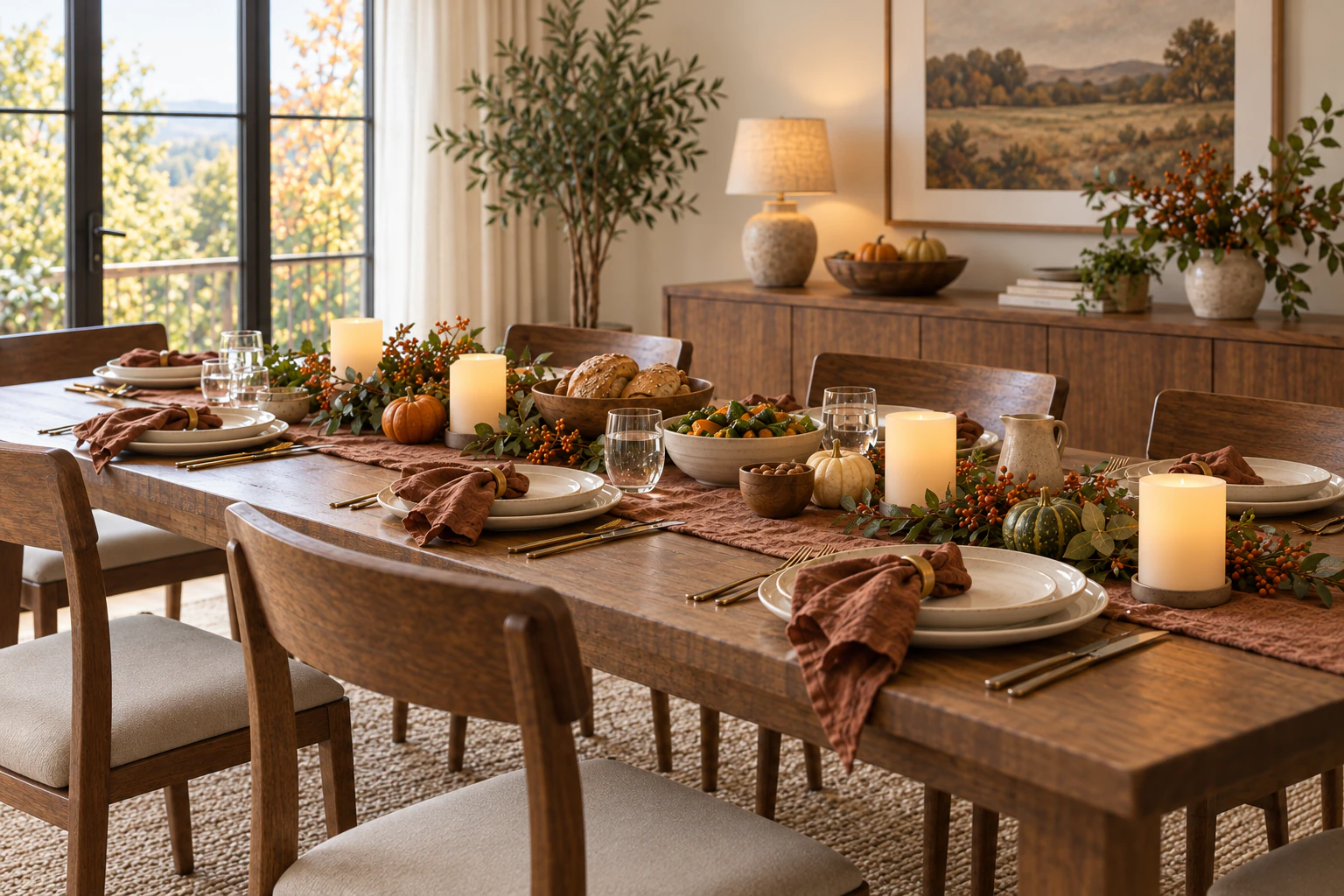
This is the most straightforward option for white or cream everyday plates. Use a warm neutral cloth or runner, then introduce caramel, tobacco, or muted rust through napkins or a small decorative detail.
Keep the color concentrated. You do not need orange in every object to make the table feel seasonal. A simple bowl of intact decorative gourds placed away from food contact, a few appropriate stems in a stable vase, or a small grouping of flameless candles can provide the seasonal focus.
Let the existing table show when its surface suits the look. A runner can define the center without requiring a new full-size cloth. Alternatively, a plain cloth can calm a strongly patterned or mismatched table arrangement.
Use handwritten place cards on modest pieces of card. Repeat one simple fold or placement for the napkins so the table feels connected without extra accessories.
The useful purchase is likely to be reusable napkins or a neutral textile rather than themed plates. After Thanksgiving, the same foundation can support a winter dinner by changing the central detail and one accent color.
Skip: multiple decorative pumpkins at every seat, bulky chargers on a small table, and tall displays that interrupt conversation. Leave visible space around the useful objects so the setting feels generous rather than packed.
Look 2: Olive, natural linen tones, and clear glass
Choose this palette when your room already includes wood, greenery, or earthy textiles. Use an oatmeal or natural-linen-colored base and olive napkins, then let clear drinking glasses keep the arrangement visually light.
“Linen-colored” describes the palette; the textile itself can be any appropriate fabric that meets your budget and laundering preferences. Read care information rather than assuming one material is automatically the most practical.
For the centerpiece, use a small number of stable vessels with suitable foliage or flowers. Keep potentially messy stems, treated decorations, and plant material away from food and place settings. Check plant suitability when children or pets may have access.
A few pears in a food-safe bowl can connect the palette without requiring a novelty object, provided the fruit is handled appropriately and decorative treatments are not applied to food intended for eating.
This look works especially well with mismatched cream plates because the repeated napkin color creates the main connection. It also adapts to a round table: use one compact arrangement rather than attempting a long runner of objects through the middle.
Skip: buying a complete collection of green glassware merely to repeat the color. The napkins and one central element can do that work. Let the rest of the table remain familiar and useful.
Look 3: Chocolate, soft cream, and a muted plum accent
For an evening gathering, build a richer palette around a brown runner, cream plates, and a small amount of plum or burgundy. Keep the deeper tones in a few controlled areas so the table remains easy to read under evening light.
Use shaded room lighting and flameless candles to create a softer atmosphere while maintaining enough light for eating and moving around. A dark tablescape should not require guests to struggle to see their plates.
Choose one surface with a little reflection, such as existing clear glassware or a metal serving piece appropriate for its intended use. You do not need a new metallic finish on every object. A restrained contrast can feel more deliberate than a collection of competing shiny details.
A patterned napkin can add interest when the cloth is plain. If the cloth already has a pattern, keep the napkins simpler. This gives the eye one clear place to focus.
The table can transition into another winter gathering by removing the harvest element and keeping the chocolate-and-cream base. That makes the reusable textiles more useful than pieces printed with a single holiday message.
Skip: strongly scented table candles, very tall arrangements, and dark glassware bought without considering how easily it can be used and cleaned. The mood should support the meal, not become its main obstacle.
Decorate a small table without sacrificing the meal
Use fewer categories of objects. A runner, napkin, and small centerpiece may be enough. Chargers, placemats, individual decorations, multiple glasses, and a continuous garland can quickly consume the same limited surface.
Move nonessential decoration to a side surface where it does not compete with serving space or create a hazard. A simple entry arrangement can set the tone before guests sit down.
Consider a removable centerpiece. Place it on a suitable tray or use one compact vessel that can be moved when dishes arrive. Decide its temporary destination beforehand rather than searching for space during the meal.
For a borrowed or extended table, repeat the same place-setting treatment across the whole arrangement. Consistent napkins and spacing can unite different tables more effectively than trying to conceal every difference beneath extra decor.
A hypothetical $100 decorating budget
Assume the table, chairs, plates, cutlery, and glasses are already available. This example covers decoration only, not food, additional seating, or a complete hosting setup.
Allocate $35 to reusable napkins or another textile with year-round use, $25 to the table’s central visual element, $15 to place cards and a small finishing detail, and $25 to tax, delivery, batteries, or contingency. These are illustrative allowances, not current product quotations.
Move money toward the item you genuinely lack. Borrowing a runner may free the textile allowance. Using flameless candles already owned may eliminate a new centerpiece purchase.
Do not spend the reserve simply to complete the budget. Extra serving utensils or a practical spill solution may prove more valuable than another decorative object. Write the final shopping list only after the complete place setting has been tested.
Use vintage pieces carefully
An inherited serving piece can make the table feel personal, but age and appearance do not establish food safety. Confirm that the item is appropriate for food or drink, and follow its care information.
The FDA’s guidance on traditional pottery warns against using ceramicware labeled for decorative use for preparing, serving, or storing food. When suitability is uncertain, do not assume that washing makes an unknown piece safe.
Use a verified everyday plate for the meal and let a suitable non-food-contact object provide the decorative character elsewhere. This preserves the personal story without asking an uncertain item to do a job it may not be designed for.
Inspect borrowed items for chips, instability, and missing parts. Practical checks matter more than whether every piece matches.
Keep flames and batteries out of the problem list
The US Fire Administration recommends considering flameless candles. For lit candles, it advises stable holders, at least 12 inches from anything that can burn, and extinguishing them when leaving the room.
On a crowded holiday table, that clearance can be difficult to maintain around napkins, sleeves, dried plants, and serving activity. Flameless options are often the simpler styling choice. Follow their instructions too, and keep small batteries secured and inaccessible to children.
Do not weave real flames into dried foliage or place them where someone must reach across them. A photograph that looks dramatic is not evidence of a safe arrangement.
Prepare in the order that reduces last-minute work
Several days before: confirm the guest count and table arrangement. Check dishes, serving tools, linens, and available seating. Ask about access or seating needs that affect the setup.
The day before: prepare textiles according to their care instructions, write place cards, and test the decoration with the serving-dish positions. Check lights and battery-operated items. Keep fragile or tempting objects out of reach where needed.
Before the meal: place only the objects the table can comfortably support. Keep the path between kitchen and dining area clear. Make water, serving tools, and spare napkins easy to find.
Afterward: clean and dry reusable items appropriately before storing them. Take one photograph and note what worked. That record makes next year’s setup simpler without requiring another full shopping list.
Frequently asked questions
Do Thanksgiving plates need to match?
No. Repeat a color or napkin treatment to create a connection. Check that the actual place settings fit comfortably and that all items are suitable for their intended use.
What is the simplest centerpiece?
One stable, low arrangement that can be moved easily. It could be an appropriate bowl, a compact vase, or a small group of flameless candles. Its footprint matters more than its complexity.
How can the table look special with no new purchases?
Edit the objects, repeat the placement, and add a personal detail such as a handwritten card. Consistency and care can make everyday dishes feel intentional without disguising what they are.
Make the gathering the focus
Choose one palette, set one place, and build outward only after the meal has enough room. The best Thanksgiving table leaves guests comfortable, the host able to serve, and the household with useful pieces that will earn their place again.
Sources
Sources reviewed October 10, 2026. The three tablescapes are original proposals; the budget excludes food and existing dining equipment.
- Better Homes & Gardens: The Top Home Entertaining Trends Shaping How We Host in 2026, editorial context.
- Crate & Barrel: Dining table size and seating guidance.
- FDA: Questions and Answers on Lead-Glazed Traditional Pottery, safety guidance.
- US Fire Administration: Candle Fire Safety, safety guidance.