Small Patio Ideas on a Budget: Create an Outdoor Room You’ll Use
A small patio does not need to perform like a backyard resort. It needs to make one ordinary part of the day more enjoyable: morning coffee, dinner for two, a quiet chapter after work, or a conversation outside.
The most useful budget decision is choosing that main activity before shopping. Otherwise, it is easy to buy a compact version of everything and end up with nowhere comfortable to sit.
Begin with the space you actually have, the conditions it faces, and the furniture you can maintain. Then add enough softness and greenery to make it inviting without creating a new collection of chores.
Why a small outdoor room is worth planning carefully
Small-space outdoor ideas have a measurable signal behind them. Houzz’s 2026 emerging summer trends report reported a 57% year-over-year increase in US searches for small patio garden ideas during the first quarter. That is activity on Houzz, not a measure of all US searches or guaranteed demand for a particular article.
For your own patio, the useful lesson is not to buy what is trending. It is to treat limited outdoor space as a room with a job. Two chairs that fit your routine can be more valuable than an impressive arrangement that stays covered and unused.
Measure the usable area, not just the paving
Draw the outline and mark the door swing, steps, drains, utility access, and any route that must remain clear. A rectangular patio may have much less usable furniture space once these are considered.
Observe it at the hours you would actually use it. Morning shade tells you little about afternoon glare. Note wind exposure, nearby irrigation, runoff, and where rainwater collects. Do not hide a drainage problem under a rug or deck tiles.
For a balcony, raised deck, or shared building, check the rules and permitted loads before adding heavy planters, screens, or furniture. A ground-floor inspiration photo is not a structural plan for an upper-floor space. Get appropriate advice where the structure or fixing method is uncertain.
Also measure the route from delivery to the patio. A table that fits outside still needs to pass through a gate or door. Check assembled dimensions, not only the shipping box.
Layout 1: The everyday coffee nook
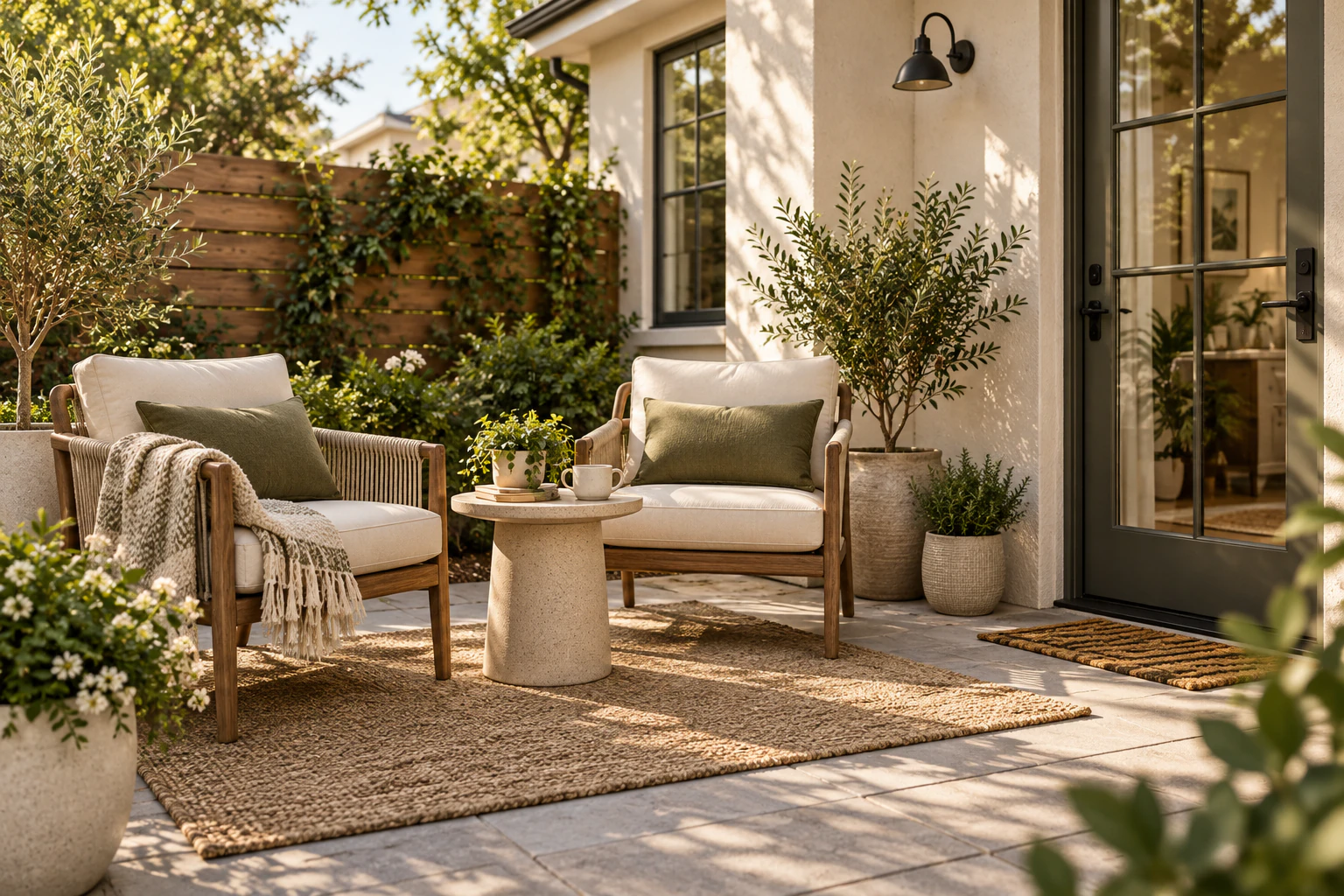
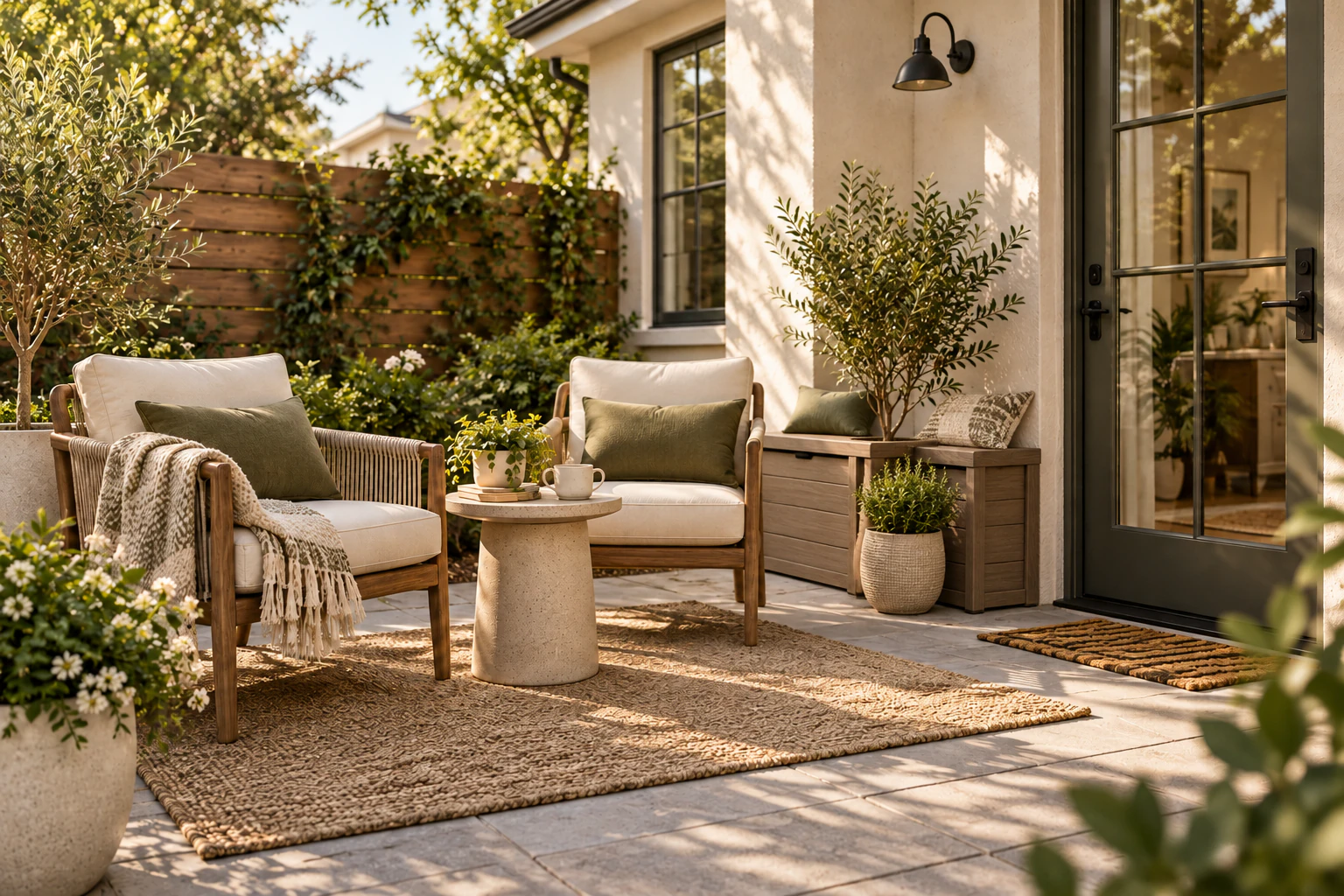
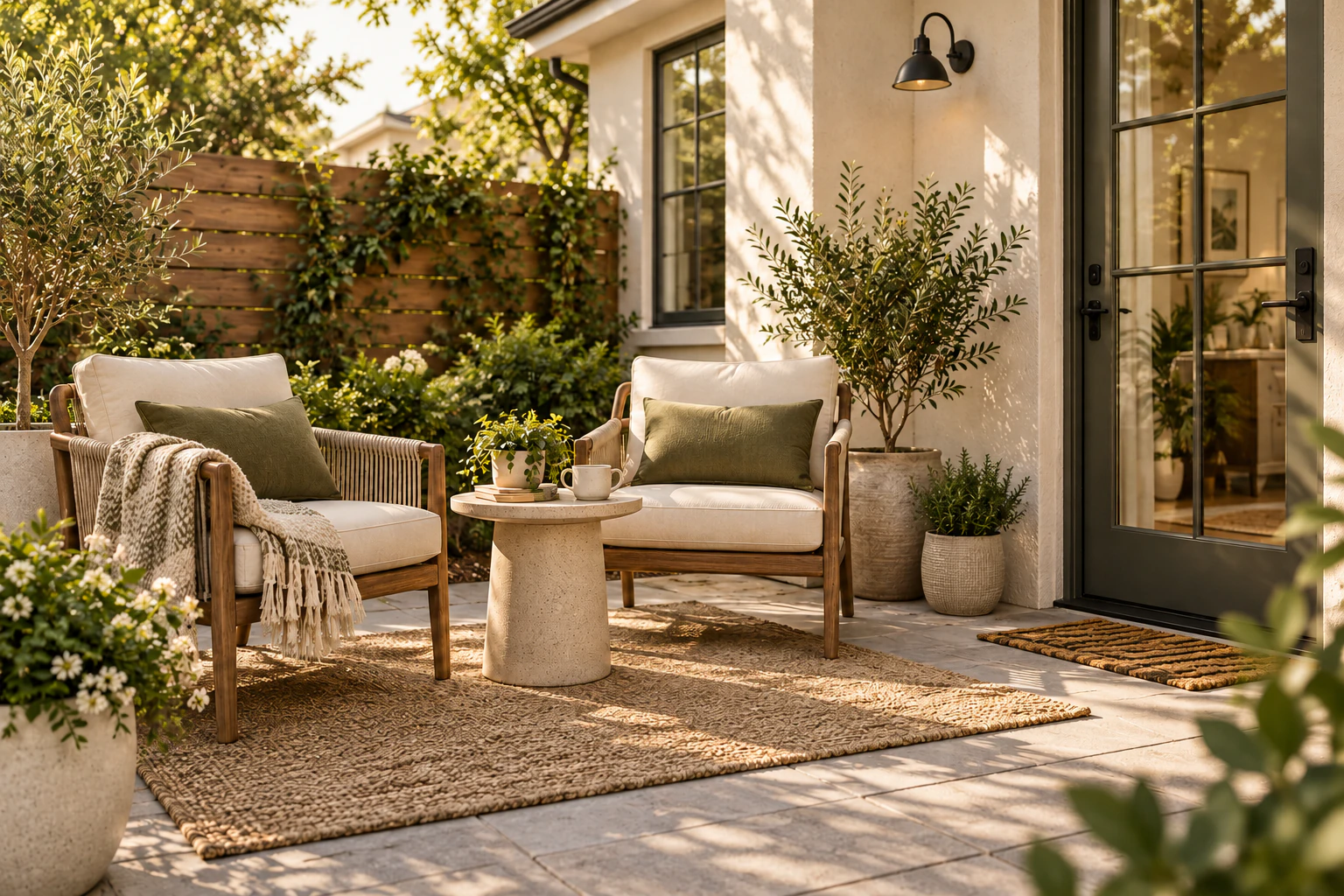
Choose this when the space is mainly for one or two people taking short breaks. Start with two upright chairs and a table large enough for the things you genuinely set down.
Angle the chairs slightly toward each other rather than automatically placing them in a straight line against a wall. Test both arrangements with existing chairs before buying. The better position is the one that allows conversation while leaving a natural route to the door.
Place the table where both people can reach it without leaning across the walkway. A narrow side table may work better than a central coffee table when the space is shallow.
Use one planting group to frame the area. Several small pots scattered between chair legs are less useful than a deliberate cluster outside the circulation route.
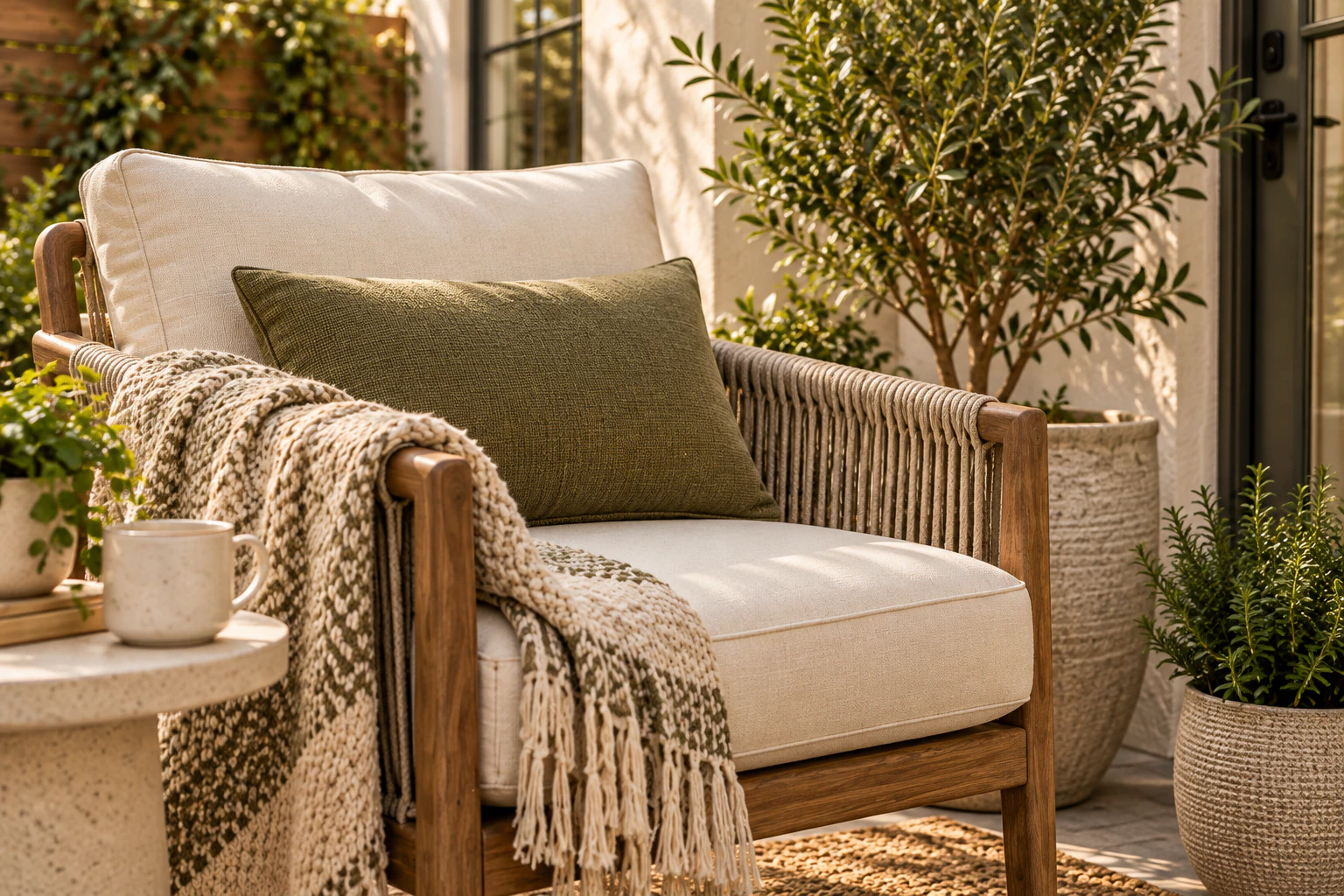
Keep accessories limited to what makes the seat comfortable. A suitable cushion and a place for your cup matter more than a second decorative table. This layout can look complete without an outdoor rug, lantern collection, or matching furniture set.
Layout 2: A genuine dining spot for two
Choose dining furniture when eating outside is the main activity. Lounge chairs and a low table can look inviting but be awkward for a full meal.
Test the table with the plates and glasses you use. Then include the space needed to pull out each chair and stand up. The furniture’s listed footprint does not include these movements.
A folding table can be useful when the patio serves another purpose between meals. Check its stability in use, its locking mechanism, and where it will be stored. Folding furniture only saves space when putting it away is realistic.
For a narrow patio, placing a compact table toward one end may preserve a continuous route along the other side. Do not force symmetry when the door position makes an asymmetrical arrangement easier to use.
Avoid filling the tabletop with permanent decoration. A small removable vessel or tray can provide a finished look while leaving room for food. Keep serving arrangements indoors when that makes the outdoor table more comfortable.
Layout 3: One excellent reading seat
A patio does not require two chairs to count as a room. When you mainly use it alone, one supportive seat, a reachable side table, and appropriate shade may be the better investment.
Try the chair in the posture you use for reading. Check the back angle, arm height, and how easily you can get up. A very low seat may not suit everyone, even when the dimensions fit.
An ottoman is optional. Trace its position on the ground and make sure it will not turn the access route into an obstacle course. Avoid buying a lounge set simply because the pieces are sold together.
Position planting where it contributes to the view from the chair. A pot that looks good from the house may be hidden behind you when seated.
For shared homes, this layout can still work as a quiet retreat. Keep one lightweight, appropriately rated extra chair available elsewhere when occasional company matters, rather than permanently sacrificing the main seat’s comfort.
Spend on the problem that prevents you from using the patio
Rank the current barriers. Uncomfortable seating, harsh sun, lack of privacy, and nowhere to put a drink are different problems and call for different purchases.
A rug will not solve an uncomfortable chair. More plants will not necessarily solve direct afternoon sun. Decorative lighting is not a substitute for a safe, usable access route.
Try a simple purchase order: make the main activity comfortable, solve the most disruptive environmental issue, and add styling last. This creates a stopping point. You can use the space before every visual detail is finished.
For existing furniture, first check its condition and care instructions. Cleaning, tightening manufacturer-approved connections, or replacing a correctly sized cushion may be enough. Do not paint over corrosion or structural damage and treat the piece as repaired.
A sample $450 spending plan
This is an illustrative allocation, not a claim about current product prices or a promise that a full patio can be furnished for this amount.
Reserve $250 for seating or improving sound existing seats, $80 for a useful table, $60 for a modest planting setup, and $60 for contingencies such as delivery or an appropriate cover. The total is $450.
A patio that urgently needs a safe shade solution requires a different allocation. Reduce the decorative purchases or postpone the project rather than choosing an unsuitable umbrella base or improvised attachment to meet a target.
Use actual delivered prices when comparing options. Include cushions sold separately, assembly, covers, and return costs. A cheaper set may stop being cheaper when the missing pieces are added.
You can also stage the work. Buy the main seat first, live with its position, and confirm the table size afterward. This is more reliable than guessing the whole arrangement from a product photograph.
Add plants that suit the conditions
Choose plants for the patio’s actual light and your willingness to maintain them, not just a saved image. Local extension guidance or a knowledgeable local nursery can help you narrow options for your climate and exposure.
University of Minnesota Extension’s small-space container guide emphasizes drainage and a suitable container growing medium. A decorative vessel without a workable drainage arrangement is not automatically a good outdoor planter.
Group containers where they can be watered and inspected without moving furniture each time. Account for drainage without creating slippery surfaces or allowing water to affect a neighbor’s property.
Check the combined weight of the container, growing medium, retained water, and plant when load limits matter. A large pot that looks light when empty can become a different proposition when planted.
Repeat one container color or shape to make a few plants feel connected. You do not need a dense display immediately. Leaving space for growth and access often produces a more practical arrangement.
Use shade and privacy carefully
Before adding anything, identify the specific problem. You may need protection from low afternoon sun, a less exposed view from one neighboring window, or simply a more defined seating area.
A freestanding umbrella requires the correct base and operating conditions for that model. A shade sail or attached screen introduces fixing and wind-load questions. Do not improvise an attachment to a railing or building surface based on appearance alone.
For rentals, check permission before drilling or changing external surfaces. Keep required access, ventilation, and emergency routes unobstructed.
A modest planting arrangement may soften a view, but do not assume it provides reliable screening or wind protection. Plan around what the actual plants will do, not the mature hedge shown in an inspiration photograph.
The simplest solution can be repositioning the chair. Test that before buying a permanent-looking screen that may be unsuitable for the space.
Treat textiles as something you will store and maintain
Keep the number of cushions manageable. Every extra textile needs an answer to the same questions: where will it go when wet, how will it be cleaned, and where will it be stored?
Read the furniture and fabric instructions together. Sunbrella’s upholstery care guidance notes that cleaning removable covers depends on how the cushion was constructed; a zipper alone does not establish that machine washing is appropriate.
Choose a cover that suits the furniture and the manufacturer’s guidance rather than simply wrapping everything tightly in whatever sheet is available. Avoid putting damp cushions into closed storage and forgetting them.
An outdoor rug is optional. Check its suitability for the surface underneath, drainage conditions, and care requirements. Remove it from the plan when it creates more maintenance than comfort.
Plan for the season you actually have
In October, outdoor priorities vary across the United States. Some households are preparing to store furniture; others are entering a more comfortable period for outdoor meals. Do not follow a single national styling calendar without considering your local conditions.
Before buying, decide where furniture, cushions, and containers will go during severe weather or periods when the patio is unused. Measure that storage space too.
A compact arrangement that is easy to bring inside may suit you better than a heavier setup that demands permanent outdoor storage. Conversely, frequent moving may be unrealistic for your household. Choose deliberately rather than discovering the difficulty during a weather warning.
Make the first version simple enough to maintain through an ordinary busy week. The patio should add a useful place to spend time, not an obligation to reset an elaborate scene every evening.
Questions to settle before checkout
Should every piece match?
No. Matching dimensions, compatible seat and table heights, and a restrained palette matter more than buying everything from one collection. Compare finishes in normal daylight where possible.
Is a rug essential for a cozy patio?
No. Comfort can come from supportive seating, a useful table, and well-positioned planting. Add a rug only when the surface, exposure, and care requirements make it sensible.
What should I buy first?
Buy the piece that enables the patio’s main activity. For a reading retreat, that is usually the chair. For outdoor meals, confirm the table-and-chair combination together. Let the actual fit determine the accessories, not the other way around.
Sources
- Houzz: 2026 US Emerging Summer Trends Report. Published May 2026; US platform searches in January–March 2026 compared with January–March 2025.
- University of Minnesota Extension: Container gardening for small spaces. Container drainage and growing-medium guidance.
- Sunbrella: How to Clean Sunbrella Upholstery Fabric. Manufacturer guidance; instructions are fabric- and construction-specific.
Research checked October 10, 2026. Layouts and budget allocations are original editorial examples, not product tests, structural advice, or current price quotations.