
Outdoor Furniture Materials Compared: What Should You Buy?
The best outdoor furniture material is not the one that wins a universal ranking. It is the one that works with your weather exposure, comfort needs, maintenance habits, and available storage.
A chair for a covered apartment patio faces a different job from a dining set beside a salt-exposed beach house. Furniture that stays in one place all year also has different practical requirements from chairs carried into a shed after every use.
Material is an important starting point, but it is not a complete quality assessment. Frame construction, hardware, finish, upholstery, replacement parts, and the seller’s terms can change the ownership experience. Use this guide to ask better questions before you commit to a set.
Start with an exposure profile
Write down whether the furniture will face direct rain, strong sun, salt spray, irrigation, leaf debris, or frequent wind. Note whether it will sit under a roof, under a temporary cover, or entirely in the open.
Next, describe your routine honestly. Will you bring cushions inside? Can you move the pieces without help? Do you have dry storage? Are you willing to maintain a finish, or do you prefer an appearance that can change with age?
Separate ordinary exposure from severe weather. A material described as weather-resistant is not a guarantee that furniture can be left unsecured during a storm. Follow the product’s instructions and local safety guidance rather than relying on its weight or marketing name.
These answers are more useful than starting with a color. They can eliminate unsuitable options before you spend time comparing styles.
Compare the complete product, not the material label
The table below is a shopping framework, not a durability scorecard. Confirm the details for the actual item being considered.
| Material category | First detail to identify | Ownership question to ask |
|---|---|---|
| Aluminum | Frame construction, coating, and hardware | Can I move and store this exact piece safely? |
| Steel or wrought iron | Actual metal and protective finish | What does the maker require when the finish is damaged? |
| Teak | Wood specification, finish, and care instructions | Am I happy with the intended weathered appearance? |
| Other outdoor woods | Species, treatment, and construction | What maintenance does this particular finish require? |
| Synthetic wicker | Weave material and underlying frame | Can damaged weave or cushions be replaced? |
| HDPE furniture | Full construction and material specification | Does its weight and assembly suit my space and routine? |
Do not assume two products with the same material name share the same performance. Ask for the missing information rather than treating a lifestyle photograph as a specification sheet.
Aluminum: examine the construction and the moving routine
Aluminum furniture is often considered when easy rearrangement matters. POLYWOOD’s material guide identifies aluminum’s relatively low weight and resistance to rust as advantages, while noting wind and surface-temperature considerations. It is a manufacturer’s comparison, not an independent test ranking.
Check the listed weight of the actual chair or table. Large pieces can still be awkward to handle, and a lightweight chair may not suit an exposed position. Consider where it will go when conditions require storage.
Inspect joints, feet, and the finish around corners. Ask what hardware is used and what care is needed in your environment. A claim about the frame does not automatically describe every fastener or accessory.
Frontgate’s furniture-care guidance also treats care by material and finish. Use instructions for the particular piece rather than applying a generic metal cleaner without checking compatibility.
Buying test: picture yourself moving the furniture through your actual doorway. Include the table’s shape and awkward corners, not just its weight.
Steel and wrought iron: distinguish appearance from specification
A listing may use “metal” as its main description, but that does not tell you whether the frame is aluminum, steel, or another material. Ask for the specification when it is not clear.
For wrought iron, POLYWOOD’s guide highlights weight and rust susceptibility. The practical question is whether the product’s finish and maintenance requirements suit your exposure and willingness to inspect it.
Look carefully at joints, feet, and areas likely to scrape against the surface beneath. Request the manufacturer’s process for addressing finish damage. Do not assume that applying any available paint preserves the product’s protection or warranty.
Heavy furniture can be inconvenient when you need to clean beneath it or relocate it before severe weather. On a balcony or deck, do not treat a reassuringly substantial appearance as permission to ignore structural or building restrictions.
Buying test: decide who will move each piece and where it will go. “We will work that out later” is a weak storage plan.
Teak: decide whether you want the weathered look
Teak often appeals to buyers who want visible wood grain outdoors. Its appearance can change, and that should be part of the decision rather than a surprise after purchase.
Fritz Hansen’s care guidance explains that untreated teak develops a silver-gray patina and distinguishes that appearance change from damage. Instructions depend on the finish and desired result; do not assume every teak item should receive the same oil or treatment.
Ask to see examples of the intended aged appearance. Then decide whether you genuinely like it. Buying wood for its fresh showroom color while disliking its natural weathering can create an ongoing maintenance commitment you did not intend.
Also check the construction, joints, table-surface design, and availability of replacement components. The species name alone does not establish the quality of every part of a product.
Buying test: compare the new finish with the look the maker says to expect after exposure. Choose the version you are willing to live with, not only the first-day photograph.
Other outdoor woods: demand a specific care plan
“Wooden outdoor furniture” is too broad a description for a confident buying decision. Identify the species, whether the surface is painted or otherwise finished, and what the manufacturer requires for outdoor use.
Do not transfer a teak maintenance routine to another wood simply because the pieces look similar. Ask whether the item is intended for covered or exposed use and whether its appearance is expected to change.
Read the instructions before checkout. List the materials, workspace, and time a recommended maintenance task would require. A routine that sounds simple on a product page may be inconvenient in a small apartment without a suitable work area.
For secondhand furniture, look for an identifiable maker or reliable information about construction and previous treatments. Avoid assuming an unknown indoor piece will become suitable for exposure after a quick coat of paint.
Buying test: describe the care process in your own words. When the requirements remain unclear, the purchase is not yet well specified.
Synthetic wicker: look beneath the weave
Wicker describes a woven construction rather than one single material. POLYWOOD’s guide distinguishes plant-based wicker from synthetic versions and notes that synthetic weave can use different plastics. Do not treat natural rattan and outdoor resin wicker as interchangeable.
Ask what the strands are made from, what sits underneath them, and which parts of the chair are covered by the stated warranty. Inspect the weave at edges, under arms, and around feet rather than looking only at the front.
The frame and cushion may have different care requirements from the weave. A furniture listing that names only the outer material leaves important questions unanswered.
Think about repairs as well. Can a damaged section be addressed, or would the entire piece need replacement? Can you buy the correct cushion shape later? Unusual curved cushions may be difficult to substitute with a generic pad.
Buying test: evaluate the chair with and without its cushions. Check whether comfort depends on a replaceable component that the seller may not continue to supply.
HDPE: useful material information is product-specific
HDPE is high-density polyethylene. Furniture described with that label can differ in design, formulation, reinforcement, and construction.
For example, POLYWOOD’s explanation of its own material describes HDPE combined with color and protective additives. That is information about the brand’s formulation, not proof that every HDPE product has identical properties.
Check actual product weight, assembly requirements, exposed hardware, and whether individual parts can be replaced. Examine the seat shape rather than assuming a broad flat surface will suit long periods of sitting.
Be equally specific about environmental claims. Ask what a recycled-content claim applies to and what evidence supports it. Do not assume every plastic furniture item is made from recycled material or accepted by your local recycling system.
Buying test: compare the documented construction and service options of the actual products. A shared acronym is not enough to explain a substantial difference in price.
Cushions deserve a separate buying decision
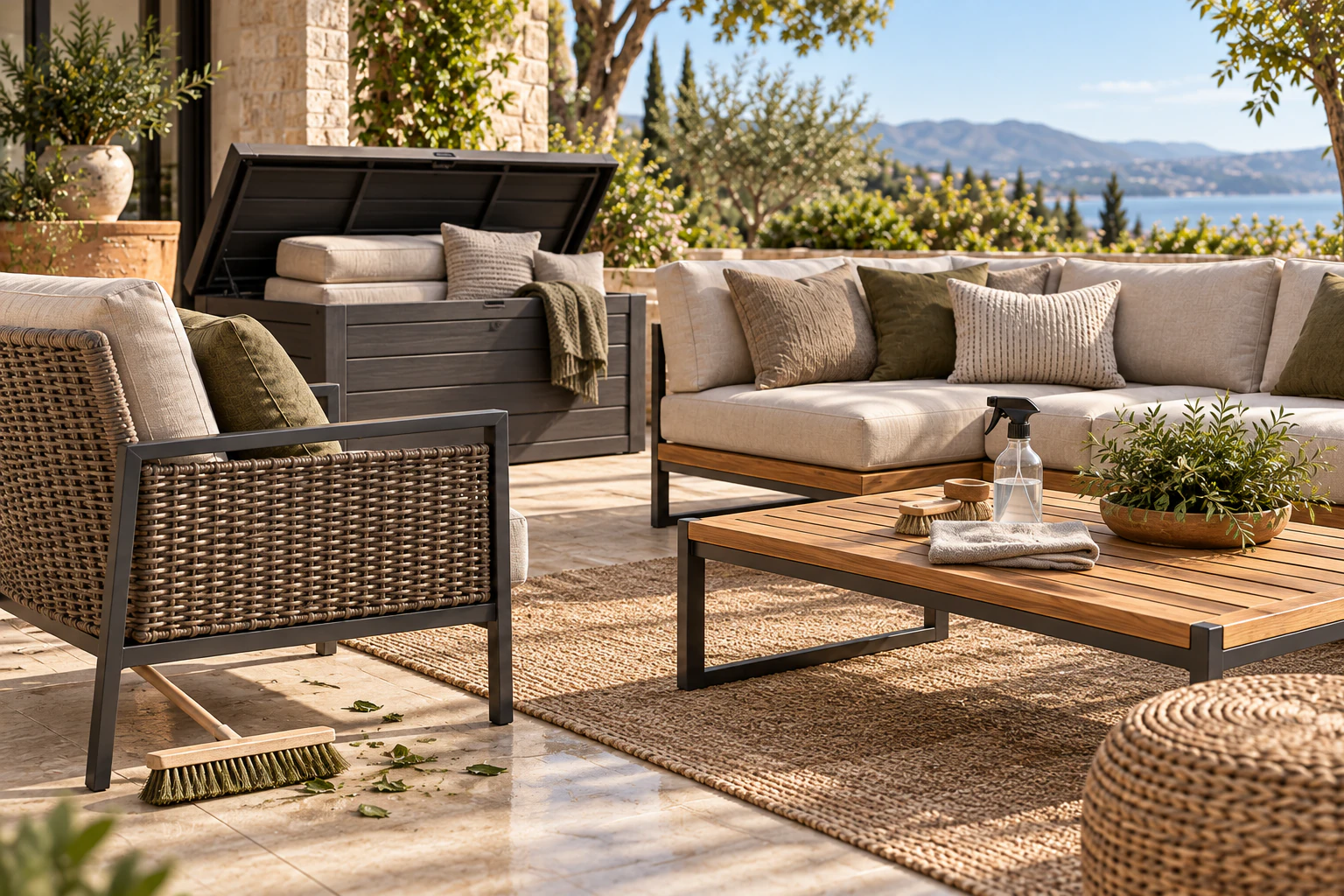
A frame can suit your patio while its cushions do not suit your routine. Check the fabric, internal filling, attachment method, drying instructions, and storage requirements.
Do not treat “outdoor,” “performance,” and “waterproof” as equivalent promises. Ask the seller exactly what exposure the assembled cushion is designed to handle and what action is required after rain.
Sunbrella’s upholstery care instructions make an important distinction: whether a removable cover can be machine washed depends on the cushion’s construction and the furniture maker’s advice. A visible zipper is not enough to decide.
Measure storage with the cushions included. Check whether the replacement size is standard or specific to that collection, and whether current replacements are actually available. Avoid guessing that a similar-looking cover will fit.
Buying test: identify the place where cushions will dry and the place where they will be stored. They may not be the same place.
Compare ownership costs without inventing a lifespan
Write down the delivered price, assembly cost, required cushions, suitable covers, and any immediate maintenance supplies. These are more useful than comparing headline prices alone.
Then check return conditions. Consider packaging requirements, collection charges, and whether assembled furniture can be returned. Read warranty exclusions and distinguish the frame’s coverage from fabric, finish, hardware, or commercial-use terms.
Do not divide a purchase price by a made-up number of years to prove it is good value. Expected service life depends on the product, exposure, care, and repair options. Without reliable evidence, a confident lifespan calculation creates false precision.
Instead, compare the known costs and unresolved questions. A product with clear specifications and obtainable parts may be easier to evaluate than one supported only by broad durability claims.
Three household scenarios
A frequently rearranged small patio: prioritize manageable dimensions, tested comfort, and a realistic moving routine. Confirm storage before choosing a heavier-looking design solely for its appearance.
A covered dining area used regularly: focus on the actual table-and-chair combination, cleaning access, and surfaces compatible with your habits. The ability to use the set comfortably matters more than buying the maximum advertised number of seats.
An exposed coastal space: request the maker’s guidance for salt exposure and severe weather. Compare finishes, hardware, cleaning requirements, and storage plans. Do not assume a general outdoor-use label answers coastal questions.
These are decision examples, not endorsements of particular products. The right material remains the one that fits the complete situation.
Before you place the order
Save the specification sheet and care instructions. Confirm measurements in the operating position, identify every included component, and write down the total delivered cost.
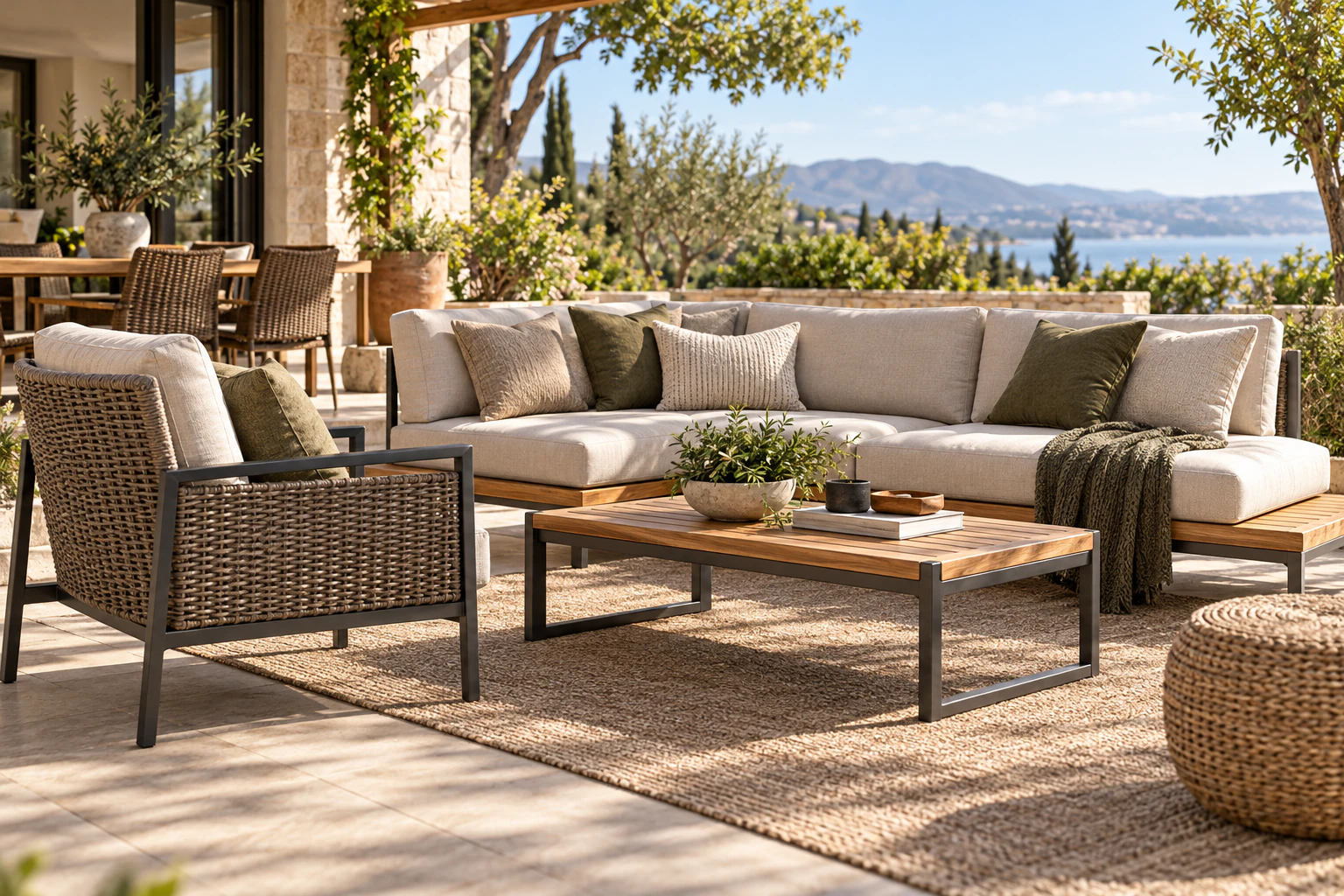
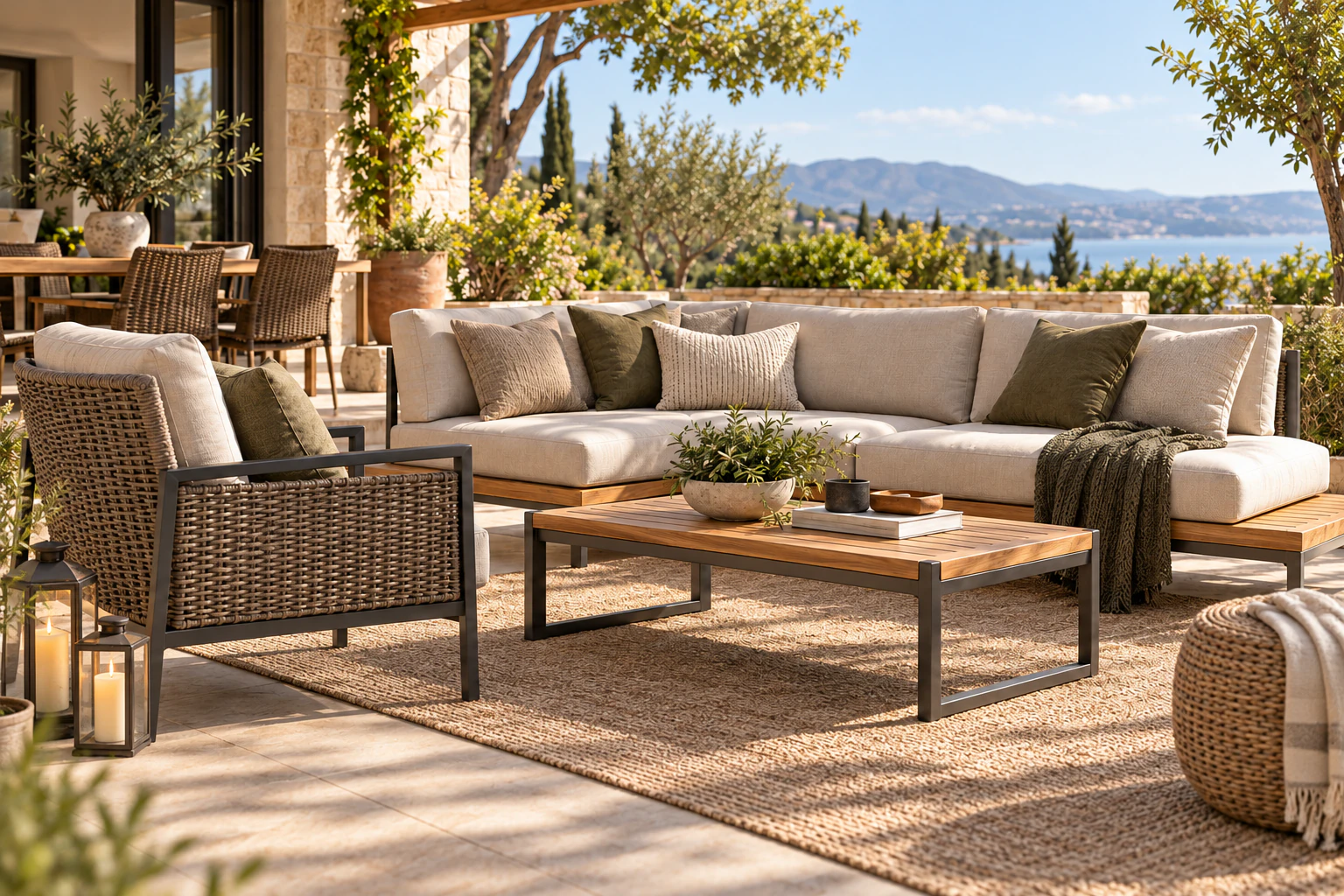
Then ask one final question: would you still choose this furniture if the styled cushions, plants, and lighting in the photograph disappeared? If the answer is yes because the furniture itself fits your life, you have a stronger basis for buying.
Sources
- POLYWOOD: Which Outdoor Furniture Material Is Best for Your Beach House?. Updated January 29, 2025; manufacturer-authored material comparisons, not independent testing.
- Frontgate: How to Clean and Care for Your Outdoor Furniture. Manufacturer/retailer care guidance; use the instructions for the actual finish.
- Fritz Hansen: Care & Maintenance. Primary manufacturer guidance, including untreated teak and patina.
- POLYWOOD: What Is POLYWOOD Made From?. Brand-specific material description; not a category-wide guarantee.
- Sunbrella: How to Clean Sunbrella Upholstery Fabric. Primary fabric-care guidance with construction-specific qualifications.
Research checked October 10, 2026. This is an editorial buying framework, not hands-on product testing or a statement of current prices, availability, warranties, or guaranteed service life.