Layered Lighting Made Simple: A Room-by-Room Guide to a Cozy Home
A room can have attractive furniture and still feel uncomfortable after sunset. Sometimes the problem is not the sofa, wall color, or layout. It is one bright ceiling light being asked to handle every activity.
Layered lighting means giving different kinds of light different jobs. You need enough illumination to move around, useful light where you read or prepare food, and optional emphasis on something you enjoy seeing.
That does not require a fixture in every corner or an expensive control system. Begin with what the room needs to do, reuse suitable lamps, and add only what is missing. A successful plan should be easy to live with on an ordinary evening, not just attractive in a photograph.
Start with an evening lighting audit
Walk through the room after dark with the existing lights in their normal positions. Sit in each frequently used chair. Look at the television, reading surface, table, and route to the door.
Describe each problem precisely. “The room feels wrong” is difficult to solve. “The bulb is visible from the sofa,” “my book is in shadow,” and “the far end feels disconnected” lead to more useful changes.
Switch lights on separately. You may discover that one lamp already solves a task well while another creates glare. Keep the useful part rather than replacing the entire scheme.
Also note outlets and switches. A lamp that looks ideal on a plan may be impractical if its cord crosses a walkway or its control is difficult to reach. Plan the operation as carefully as the appearance.
The three layers, explained without a shopping list
Ambient light provides the room’s general illumination. It should help you understand the space and move through it comfortably. A ceiling fixture can contribute, but several appropriate sources may also create the general effect.
Task light serves a particular activity. A reading lamp should illuminate the page; a work-surface light should help you see the area where you are working. Its usefulness depends on position and direction, not simply on how decorative the fixture looks.
Accent light draws attention to a chosen feature, such as artwork or an interesting surface. It is optional. Add it after the room functions properly, and avoid turning every object into a highlighted display.
These are roles, not mandatory product categories. One lamp can contribute to more than one layer. Equally, buying three lamps does not automatically produce a balanced plan when they all illuminate the same spot.
Choose brightness and color appearance separately
The Federal Trade Commission’s bulb-buying guide explains the basic distinction: lumens describe light output, while watts describe power use. Compare the Lighting Facts information rather than assuming a higher wattage is the best measure of brightness.
Color appearance is a different choice. The Department of Energy’s guidance identifies 2700K and 3000K as common warm and soft appearances. These are useful starting points for testing a warm interior, not mandatory settings for every person or task.
Buy a small trial quantity before changing every bulb. View the result with your actual wood, paint, fabrics, and lampshade. A description such as “warm white” is less useful than the stated specification and how it looks in your room.
Aim for intentional relationships between neighboring light sources. A room can feel disjointed when one lamp appears strongly blue beside a distinctly yellow lamp. That does not mean every space in the house must use an identical bulb.
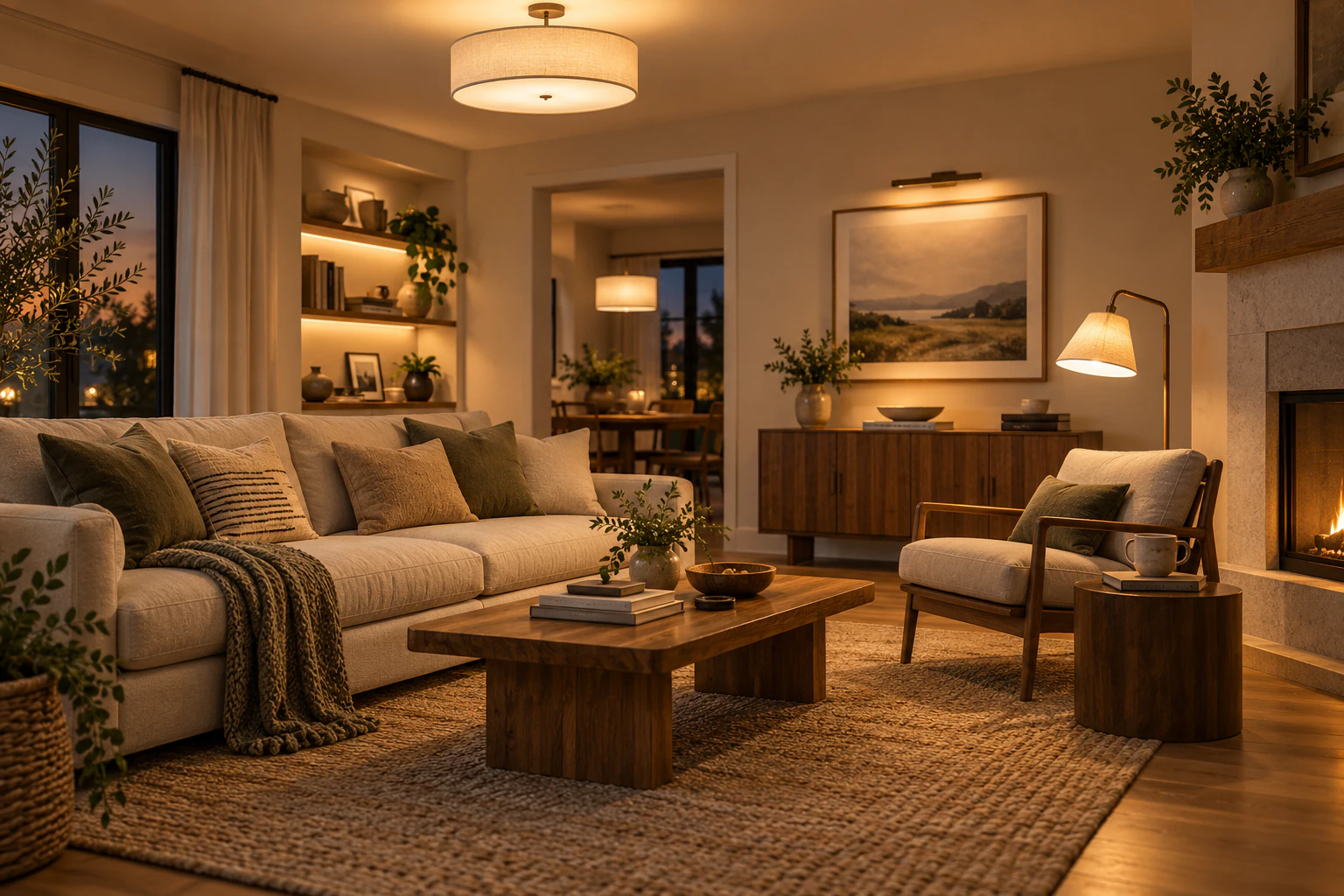
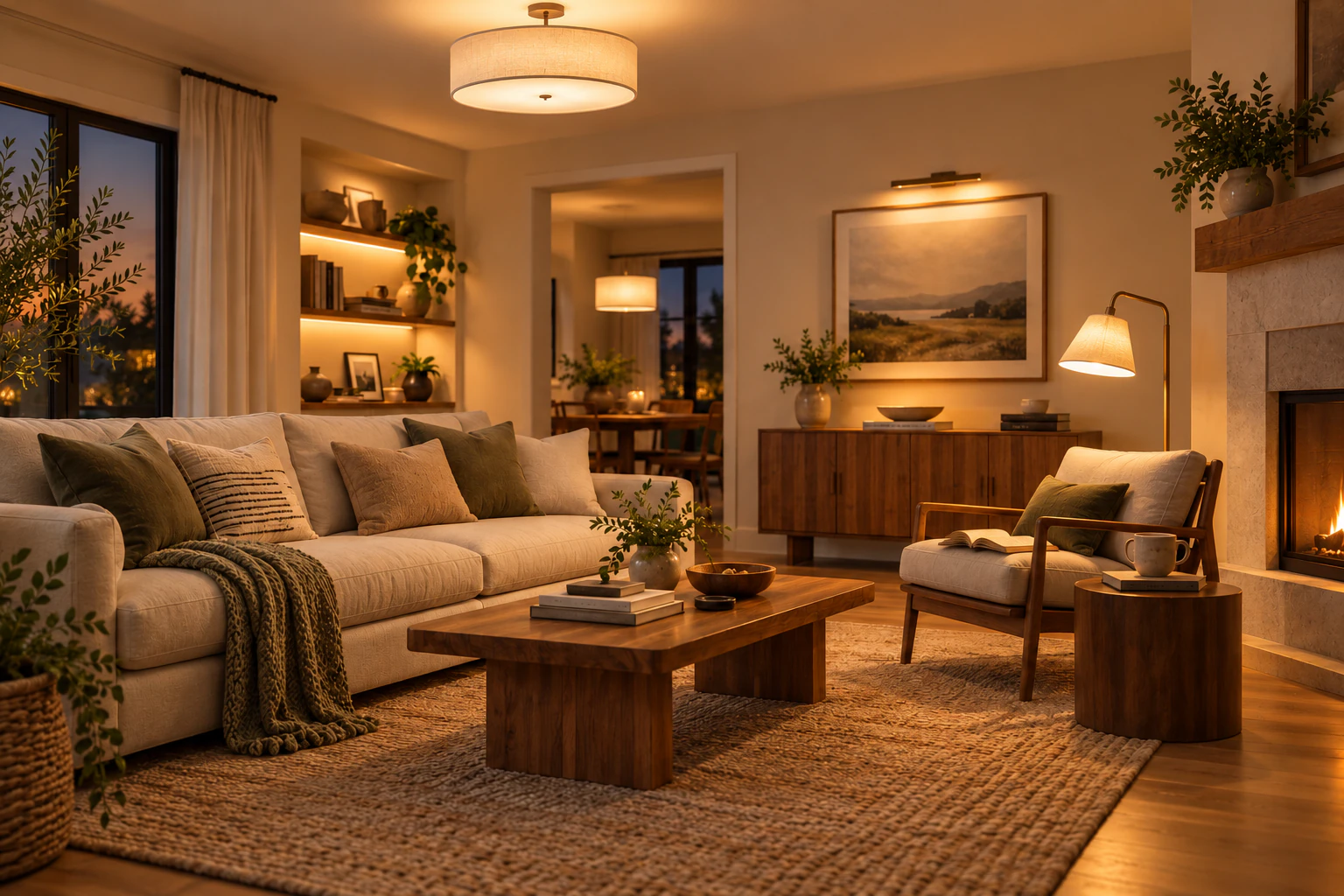
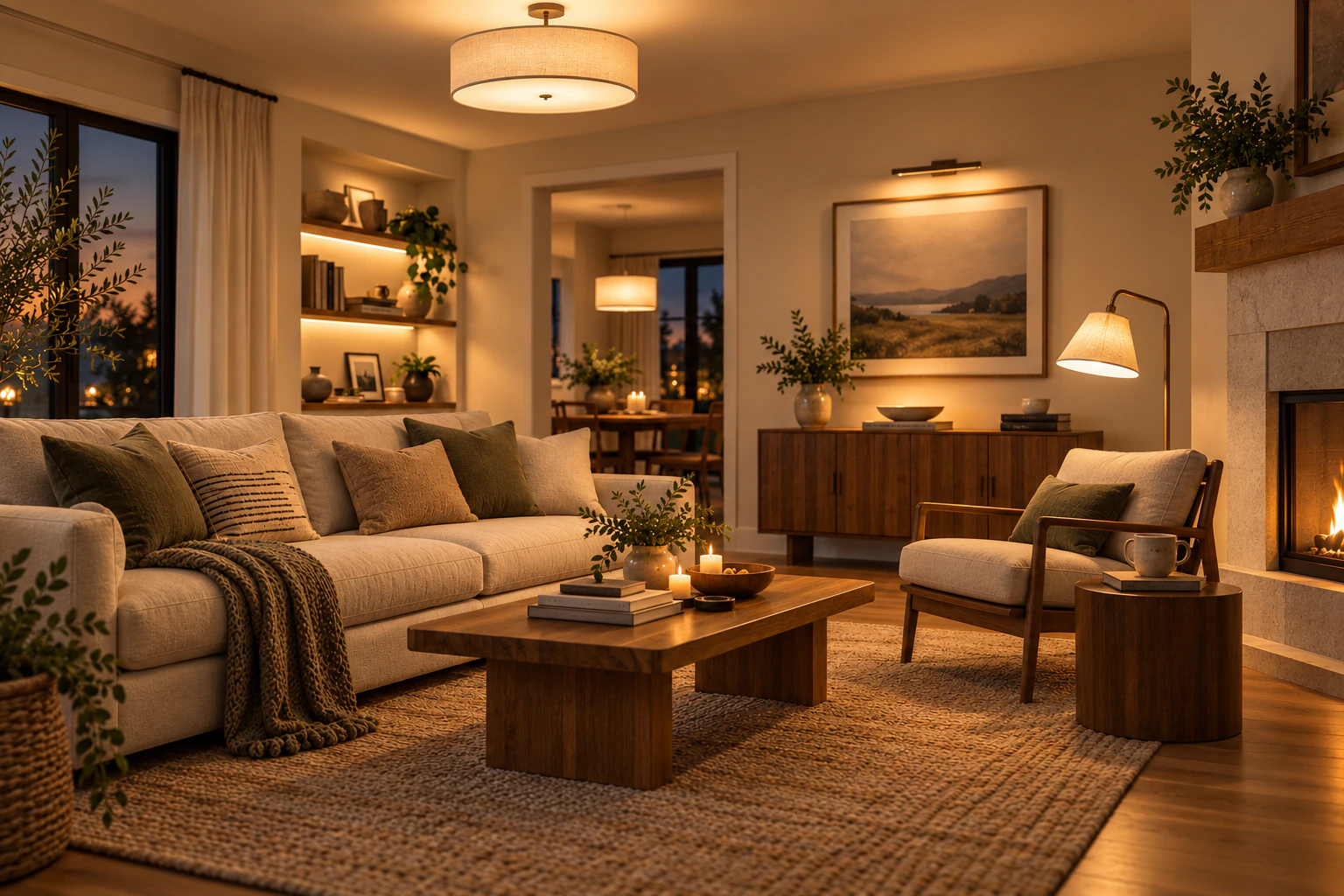
Living room: separate conversation, reading, and screen time
Begin with the main seating area. Place a suitable lamp where it contributes light without forcing people to look directly at the source. Check the view from seated eye level, not only from the doorway.
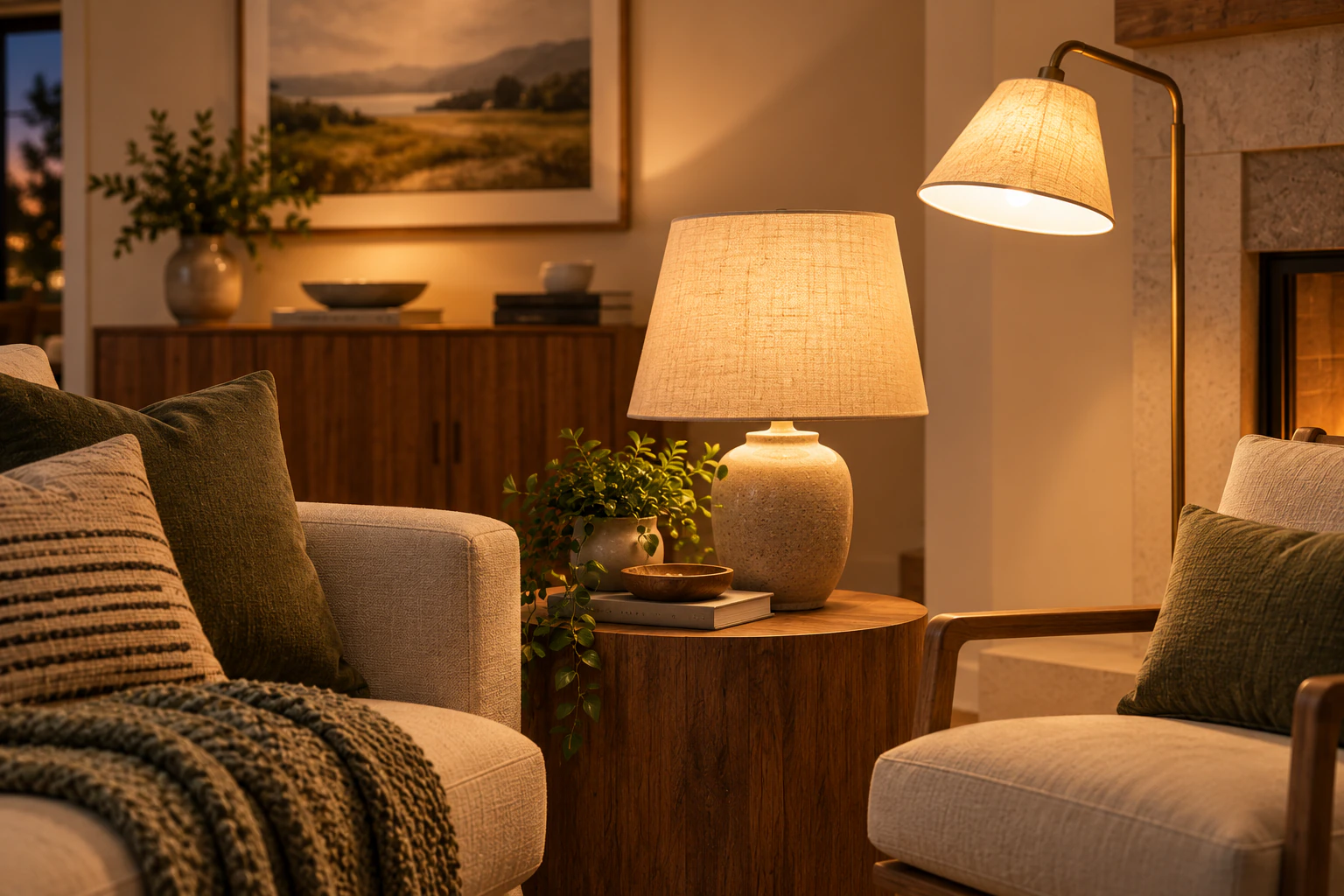
Give the reading seat its own useful illumination. A lamp behind the sofa may look balanced while leaving the page dark. Test placement using a book and the posture you normally use.
Then check screen reflections. Move or redirect a light when it creates a distracting bright reflection. Do not assume the solution is to make the entire room dark; the goal is a comfortable combination for the people using it.
For a long room, one additional source near the far end can help connect separate areas. It need not match the first lamp exactly. Repeat a finish, shape, or shade color when you want the pieces to feel related.
Finish by removing redundant light. If several lamps brighten the same side table while a main activity remains unsupported, redistribute them before buying another.
Bedroom: prioritize reach and independent control
Start at the bed. Each regular occupant should be able to operate the light they need without an awkward stretch or a cord hanging across the route out.
A shared bedroom may need different task-light arrangements on each side. Matching lamps are optional when the two people read differently or have different surface space. Coordinate the overall look without forcing identical functions.
Check whether the lampshade or light direction works when you are sitting up in bed. A lamp that is comfortable at a desk may expose the bulb from a lower pillow position.
Keep a clear bedside surface for the objects used every night. A large decorative base can consume the useful area of a small nightstand. Consider the complete combination of lamp, table, and everyday items.
For dressing and finding clothing, keep practical general illumination available. A cozy bedroom does not have to be permanently dim. Create choices for different activities rather than making one setting do everything.
Dining room: light the meal and support the surrounding space
Assess the table from a seated position. Can everyone see the food and the people opposite? Does a visible bulb or reflective shade dominate the view?
A pendant can provide a visual center, but its size, light distribution, and installation need to suit the actual table and room. Avoid choosing it only from a photograph of a much larger dining space.
If the table is used for work, crafts, or homework, plan for that activity too. A soft dinner setting and a useful work setting need not be identical. Appropriate controls or a separate task source may provide the flexibility.
A lamp on a nearby sideboard can contribute to the room’s atmosphere when the surface, outlet, and cord route make it suitable. Leave enough space for serving, and do not place a lamp where it competes with a hot dish or a busy buffet setup.
Test the arrangement with the table extended when you use extension leaves. The room must still function in its less frequent but important configuration.
Kitchen: see the work before styling the room
Identify the surfaces where food preparation and other detailed tasks happen. Stand in your normal working position and check whether your body blocks the existing light.
An appropriate under-cabinet or directed lighting solution may address a work-surface shadow more effectively than another central ceiling fixture. Electrical installation and product suitability should be assessed by a qualified professional when required.
Keep decorative additions separate from the essential lighting plan. A lamp can look appealing in a kitchen, but not every lamp belongs near moisture, heat, or a food-preparation zone. Confirm suitability and preserve a safe cord route and usable counter space.
When updating more than one source, view the light on the same counter and cabinet surfaces before committing. The goal is a coherent working environment, not a collection of unrelated lighting effects.
Retain an easy way to illuminate the room fully for cleaning. Softer evening light is an option, not a replacement for seeing the space clearly when the task requires it.
Renters can improve the plan without rewiring
Start with suitable table and floor lamps placed near existing outlets. Repositioning a lamp you own is a useful experiment before purchasing a new one.
A plug-in wall light still needs an appropriate mounting method and a safe cord arrangement. Check permission and installation instructions. “Plug-in” does not mean every wall attachment is damage-free or suitable for every surface.
Rechargeable lamps can be useful in specific locations, but check actual runtime at the intended brightness and the charging routine. A portable lamp that spends most evenings uncharged may not solve the problem it was bought for.
Keep controls simple. You do not need app-based lighting when ordinary switches meet the need. Conversely, a control that genuinely improves accessibility may be worth considering. Choose the function first and the technology second.
Avoid a plan that relies on makeshift wiring or cords routed under rugs. Get advice when the existing electrical arrangement cannot support the intended use safely.
Dimming requires compatible components
A “dimmable” label on a light source does not promise that it works with every control. ENERGY STAR’s downlight guidance advises checking manufacturer compatibility information when pairing LEDs and dimmers.
Identify the exact light source and control model. Review their documentation together before purchasing or changing components. Do not try to solve persistent flicker, buzzing, overheating, or other concerning behavior by ignoring it; stop using suspect equipment and seek appropriate advice.
For integrated LED fixtures, ask whether the light source or driver can be serviced and what happens when it fails. A decorative fixture’s purchase price is not the only ownership consideration.
For replaceable bulbs, check the base, dimensions, fixture rating, and any enclosed-fixture restrictions. The Department of Energy specifically notes that enclosed fixtures can require suitable LED products because of heat buildup.
A modest lighting budget, used deliberately
Imagine a $200 improvement budget for a room with sound existing fixtures. An illustrative allocation might reserve $110 for the one missing lamp, $40 for compatible bulbs or a suitable replacement shade, and $50 for delivery or other contingencies.
This is a planning example, not a current price guide. It does not include electrical installation. When professional work is needed, obtain a relevant quote rather than squeezing it into an unrealistic decorating allowance.
Spend according to the audit. If your reading light already works well, keep it. If the room’s main problem is an exposed bulb, changing placement or an approved shade may be more useful than adding another fixture.
Try one change at a time and evaluate it during normal use. It is easier to understand what helped when the entire room has not been changed at once.
Common problems and better next steps
The room is bright but still uncomfortable
Look for glare, exposed sources, harsh reflections, and uneven distribution. More total light is not always the answer. Change direction or placement and inspect the view from the seats people actually use.
The room looks cozy in photos but is difficult to use
Restore enough practical light for movement and tasks. A photograph can tolerate a moodier scene than everyday life. Treat visual comfort and usability as the standard, not the darkest appealing image.
Every bulb says warm white, but the room looks inconsistent
Compare the actual specifications and test the bulbs in their fixtures. Shade materials, bulb design, and the surrounding surfaces affect the final appearance. Replace one mismatch at a time rather than buying another large mixed pack.
The controls are becoming complicated
Reduce the plan to a few useful choices: general use, a specific task, and a softer setting where appropriate. More scenes are not automatically more helpful. Other household members should be able to use the room without instructions.
Finish with a normal evening, not a styling session
Use the room for its real activities. Read a chapter, eat a meal, put clothes away, or sit with someone and talk. Operate the lights as you normally would and note what still feels awkward.
The finished lighting plan is the one that supports those activities comfortably and makes the room pleasant to return to. Keep the useful layers, remove unnecessary fixtures, and let the light serve the home rather than becoming another thing to manage.
Sources
- Federal Trade Commission: Shopping for Light Bulbs. Lumens, wattage, and the Lighting Facts label; published August 2023, checked for this draft.
- US Department of Energy: Purchasing Energy-Efficient Light Bulbs. Basic color-temperature and enclosed-fixture guidance. Older procurement assumptions and historical savings figures were not used as current consumer claims.
- ENERGY STAR: Light Fixtures (Downlights). LED/dimmer compatibility guidance. The article does not assume the former broad light-bulb certification program remains active.
Research checked October 10, 2026. Room plans and budget allocations are original editorial examples. This is a decorating guide, not electrical installation advice or hands-on product testing.